Botulinum toxin
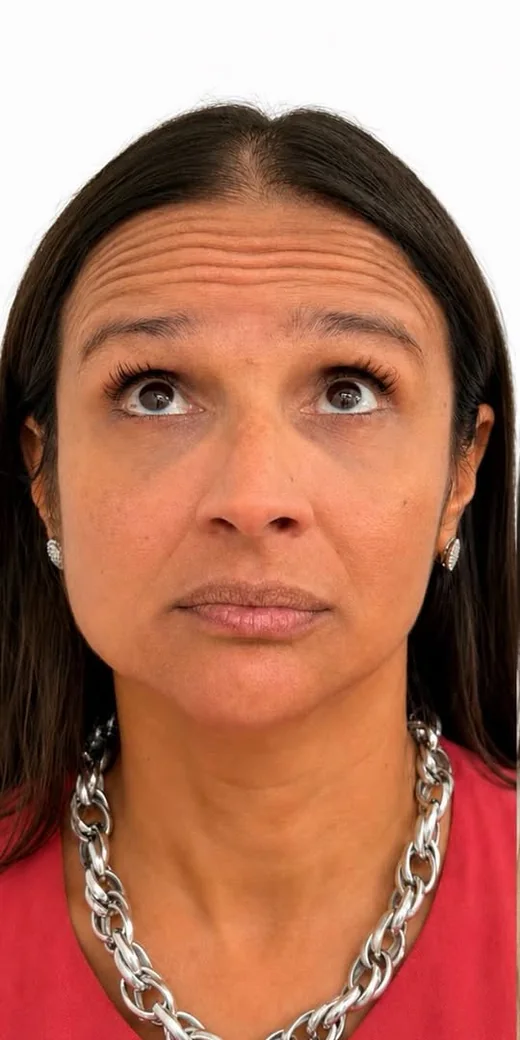
- What bothered the patient
- Marked lines on the forehead when raising the eyebrows.
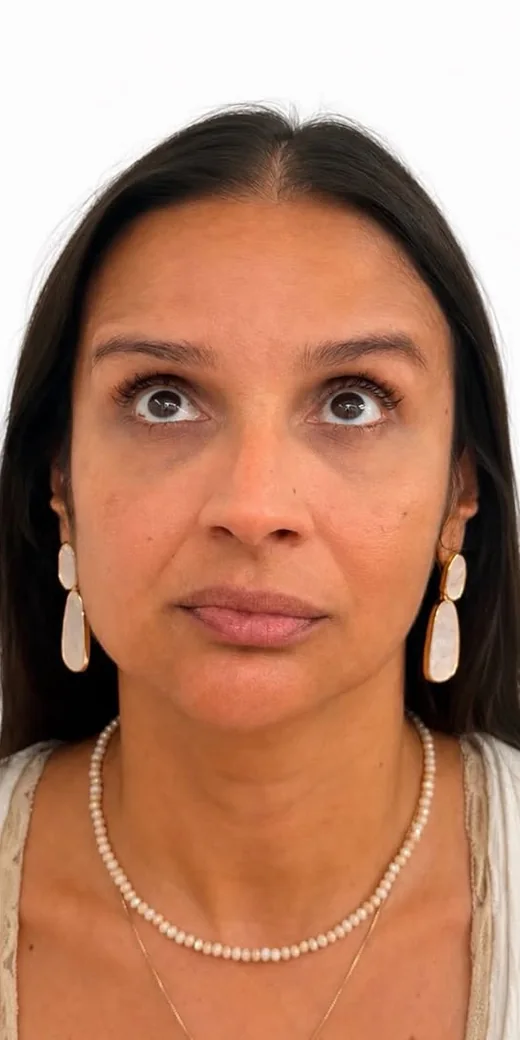
- What was done
- Botulinum toxin in the upper third of the face.
- What can happen
- Small bruises at the injection points. The effect is temporary.
Expression lines
I use botulinum toxin to soften expression lines and preserve the way your face moves.
Dr. Islla Paiva · Master's degree and specialist in Orofacial Harmonization
Quick answer
Botulinum toxin, known as Botox, temporarily relaxes the muscles that form the expression lines on the forehead, between the eyebrows and around the eyes (crow's feet). It can also be applied to other areas of the face and to the neck, depending on the consultation. Results start to show between the third and fifth day, and the full effect comes in about two weeks. It generally lasts between 3 and 6 months and varies from person to person.
Botulinum toxin relaxes the muscle that forms the expression line. With it, I treat the lines on the forehead, the area between the eyebrows, which we call the glabella, and crow's feet, those fine lines around the eyes. My goal is never to change your face, but to soften the lines and preserve your expressions, so your eyes look more rested.
I also apply it to other areas of the face and to the neck, when the consultation shows it makes sense. The points and the doses change from person to person, because every face moves in its own way, and that is what I observe before applying. Results start to show between the third and fifth day, and the full effect comes in about two weeks.
If you have never had any procedure, the toxin is usually a good place to start, along with skin care. That is how I guide those who are just getting started. I would rather manage aging over the years than wait for a line to set in and then try to correct it, which is why I talk so much about prevention.
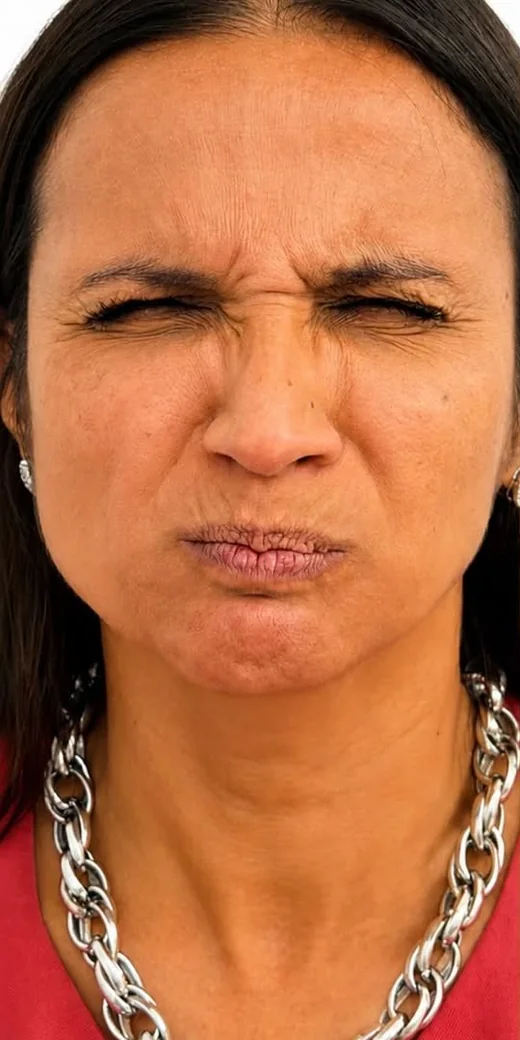
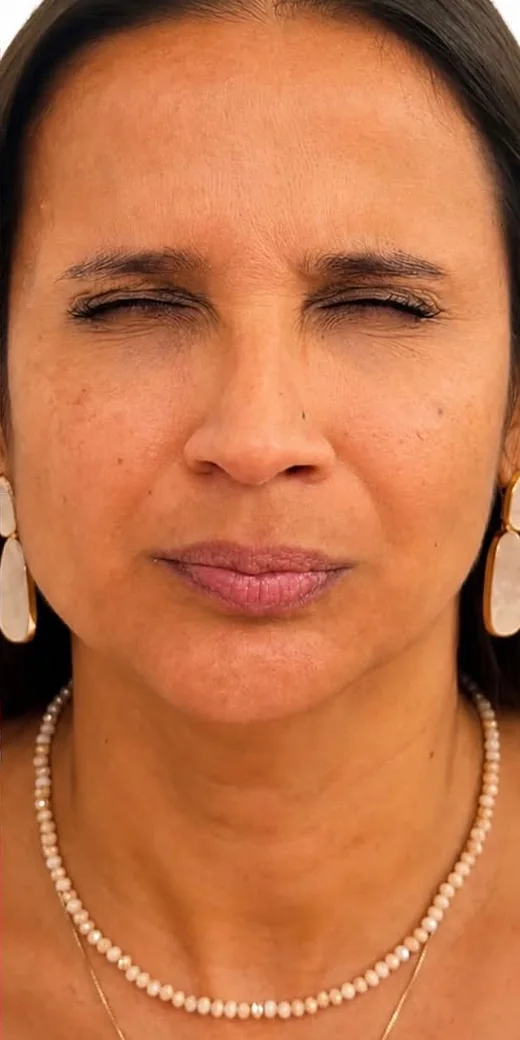
Cases published on my Instagram. Disclosure follows Brazilian Federal Council of Dentistry (CFO) Resolution 196/2019. Results vary from person to person and depend on individual evaluation.
The application can cause small bruises, mild swelling and tenderness at the injection points, and some people get a passing headache. There may be temporary asymmetry, which I reassess at the follow-up visit. More rarely, the toxin reaches a neighboring muscle and causes a temporary drooping of the eyelid or the eyebrow. Pregnancy, breastfeeding, neuromuscular diseases, allergies and any medication you take regularly must be reported beforehand. The response varies from person to person, and the indication of points, doses and interval comes out of the consultation.
The most common application of botulinum toxin is in the upper third of the face: forehead, between the eyebrows and crow's feet. In a full face application, points are also included in the lower face and the neck. Those areas take part in smiling and speaking, so the dose and the points demand even more judgment, and I only recommend it when your concern is in those areas. Full Face 3D is something else: it is my layered rejuvenation technique, which may or may not include the toxin.
Results start to show between the third and fifth day, and the full effect comes in about two weeks. It generally lasts between 3 and 6 months, depending on your metabolism, the technique and the dose. When movement starts to come back, we assess reapplication.
My goal is that it does not. I choose the points and the doses to soften the lines and preserve your expressions. If any area turns out different from what we planned, I reassess it at the follow-up visit.
Pregnant and breastfeeding women should postpone the application. Anyone with a neuromuscular disease, such as myasthenia gravis, needs to let me know beforehand, because the toxin may not be indicated. It is also not applied to an area with infection. At the consultation, I ask about medical conditions, allergies and every medication you take.
Tell me what bothers you. We look at your face in layers and decide what is worth treating.
Book on WhatsApp